
The IRN Blog
Ice Stupas: How an Open, Community-Led Idea Is Reshaping Water Security in the Himalayas
by Prerak Nayar
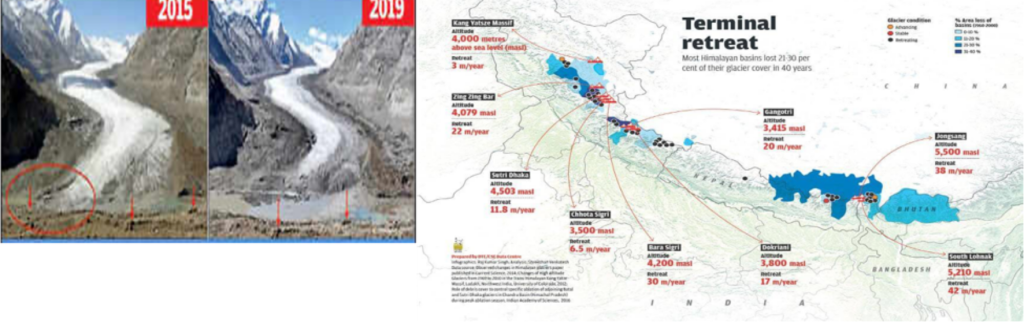
Every spring, farming villages high in the Indian Himalayas face the same problem: due to Global Warming, the glaciers they depend on for water are retreating and the meltwater they do get arrives too early, long before crops actually need it. It’s a mismatch of timing as much as scarcity, and it’s pushing families to abandon farmland and migrate to cities.
The response to that problem is a striking example of open and frugal innovation: the Ice Stupa.
A Simple, Borrowed Idea
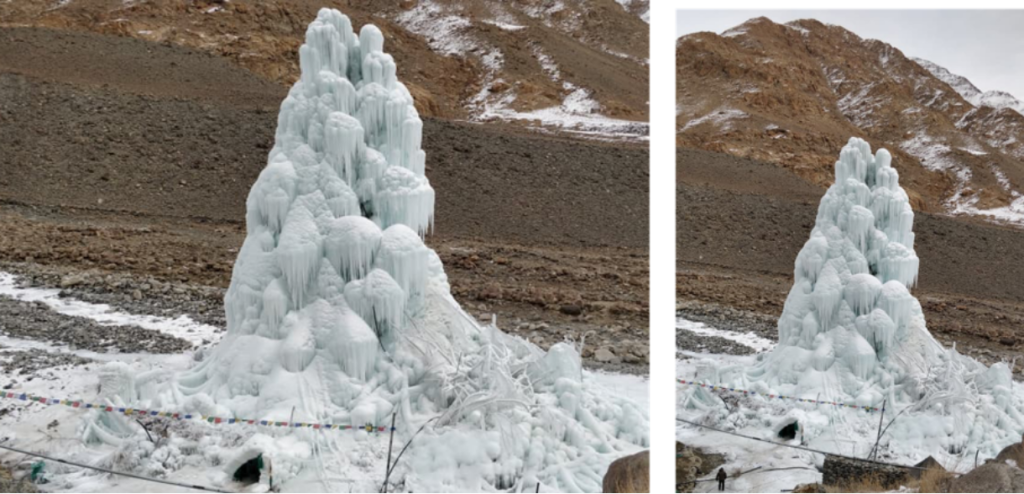
An Ice Stupa is, in essence, an artificial glacier. Water from a mountain stream is piped downhill using gravity alone, with no pumps or electricity, to a village site, where it is sprayed vertically into freezing winter air. As the droplets fall, they freeze, gradually building a tall cone of ice that can reach 30–50 metres in height. Each ice stupa can store millions of litres of water.
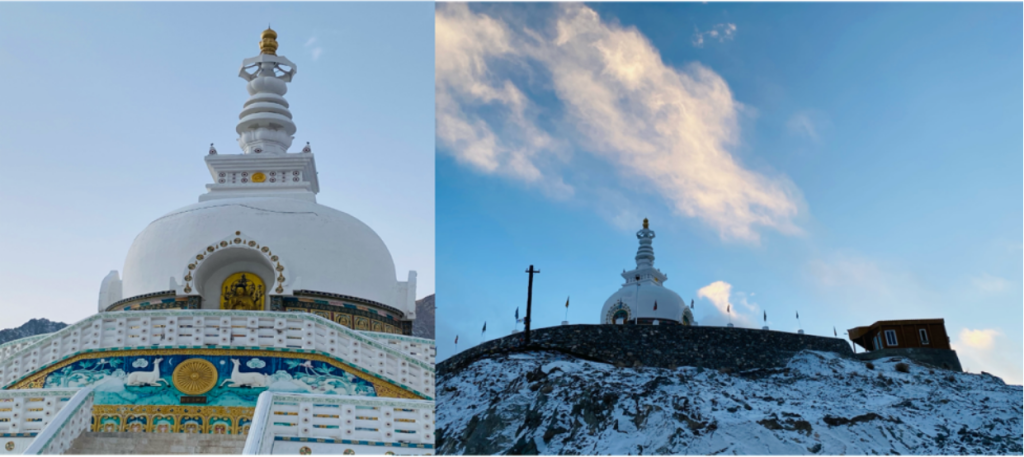
The shape isn’t accidental. It’s modelled on the Buddhist stupa, a structure already deeply familiar and meaningful in the region. That cultural resonance made the idea easy for communities to understand, trust, and adopt; a reminder that good innovation often succeeds not by introducing something unfamiliar, but by working with existing culture and forms rather than against them.
Because a cone has far less surface area exposed to the sun than a flat sheet of ice, it melts slowly through the following spring, precisely during the window, from March to May, when farmers need water most and when traditional glacial melt has already passed.
Frugal by Design
What makes the Ice Stupa remarkable isn’t just the physics, it’s the economics. The concept was pioneered by engineer and educator Sonam Wangchuk, founder of Ladakh’s SECMOL alternative education project, who built the first experimental stupa in 2013. A single stupa can be built for a fraction of the cost of conventional water infrastructure like dams or bore wells, requires no ongoing maintenance, and can irrigate one to two hectares of farmland during the critical growing season.
This combination of cheap materials, no electricity, no specialised equipment, and a design any village team can build and repair itself, is a textbook case of frugal innovation: solving a hard problem by working within severe constraints rather than around them.
The Innovation Belongs To Us All
What strikes me most, though, is how the idea spread. There was no patent, no licensing deal, no single organisation controlling how it was used. The design, once proven, was shared openly and adapted freely, by other villages in Ladakh. Then the idea was copied by engineers and communities elsewhere in the Himalayas, and eventually as far afield as Switzerland, Scotland and Chile. From that single experimental stupa in 2013, the concept scaled to dozens and then hundreds of installations across multiple countries within a decade, each one adapted to local terrain and needs by the people who would actually rely on it.
That pattern, a method that improves and spreads because nobody tried to own it, maps closely onto principles the open research and reproducibility community champions: transparency about how something works, and accessibility to anyone who wants to replicate, test, or adapt it, regardless of their resources or institutional standing. The Ice Stupa was never formally published or peer-reviewed, but it was reproducible in the fullest sense, anyone with a stream, a pipe, and a cold winter could verify it for themselves. That openness is arguably what let it scale as quickly as it did.
A Case Study Worth Watching
Ice Stupas won’t solve climate-driven water stress on their own, and they’re not a substitute for the larger structural changes glacier loss demands. But as an example of what transparent, freely-shared, low-barrier innovation can achieve outside a traditional research setting, it’s a story worth knowing — and a useful reminder that openness is as much a mindset as it is a policy.
Prerak is an Army Veteran, who loves to travel and share stories from different cultures and parts of the world. Currently based in Dublin, can be reached out at majorpreraknayar@gmail.com.